
Where Your Money Goes: A Transparent Look at Building a Custom Home
We all know that buying or building a home will most likely be the biggest expense we ever take on. And for that reason, it can be easy to worry about things like hidden fees and unexpected costs. Perhaps even worse, what if you find yourself spending more than your budget allows?
That’s why we take a transparent, open-book approach to our custom home-building process. We don’t want our home buyers to be caught off guard. While the average cost of a home in Springfield, MO, is just over $245,000, we recognize that those who choose to build a custom home spend far more than that to get the house of their dreams. When you’re spending big money like that, you deserve to be kept in the loop every step of the way.
Understanding Your Budget Before Construction Begins
It can be so easy to get focused on that final number, the total price tag, of a home. But many homeowners don’t really understand all that goes into that price. Factors like labor, materials, lot conditions, design complexity, and finish selections all play a role, and each can significantly affect the overall investment.
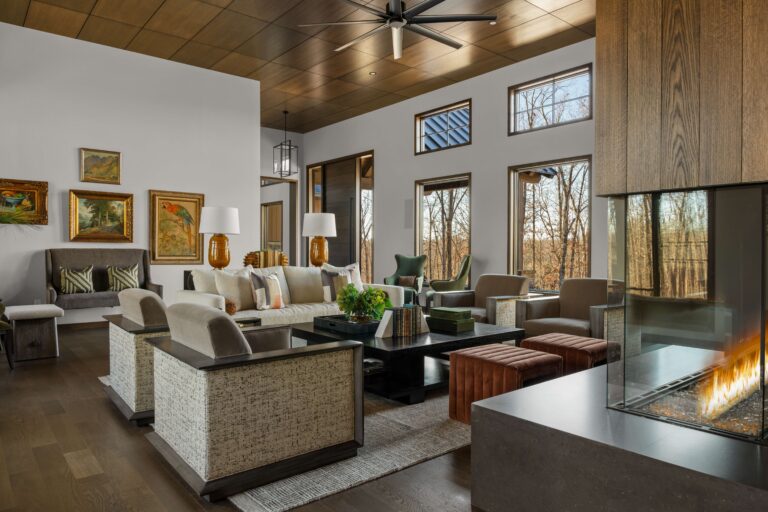
The reality is that the decisions you make early in the process carry real financial weight. Choosing a more complex roofline, selecting imported tile, or adding square footage mid-project can all push costs in directions that catch homeowners off guard if they haven’t been part of ongoing budget conversations.
A custom home budget breakdown isn’t just a document handed over at the end. We see it as a living picture of your project that we should be looking at often throughout the process. At Alair Springfield, transparency begins long before anyone breaks ground. It starts with the very first conversation.
Step 1: The Planning Agreement Sets the Foundation
The planning agreement is where everything begins. Before a single blueprint is drawn or a single subcontractor is called, we sit down with you to discuss your goals, priorities, lifestyle, and expected budget.
This isn’t a one-time budget conversation. At Alair, we talk about costs from day one and return to those conversations throughout the entire process. That means you’re never left guessing where the numbers stand.
Questions That Help Shape the Budget
We don’t just make assumptions when determining how much your Springfield custom home will cost. We work through a series of questions that help us all get on the same page. Here’s what you can expect us to ask you about.
- Home size: How many square feet are you envisioning, and how many bedrooms and bathrooms do you need?
- Lot considerations: Do you already own land? What are the site conditions, access, and utility requirements?
- Desired features: Are there must-haves, such as a home office, mudroom, or chef’s kitchen?
- Timeline expectations: When do you need to be in the home, and how does that affect scheduling and pricing?
- Level of customization: Are you drawn to unique architectural details, custom millwork, or high-end finishes?
The answers to these questions directly shape what your custom home will cost. The clearer we understand your vision from the start, the more accurately we can plan within your budget.
Step 2: Architectural Plans Bring the Vision to Life
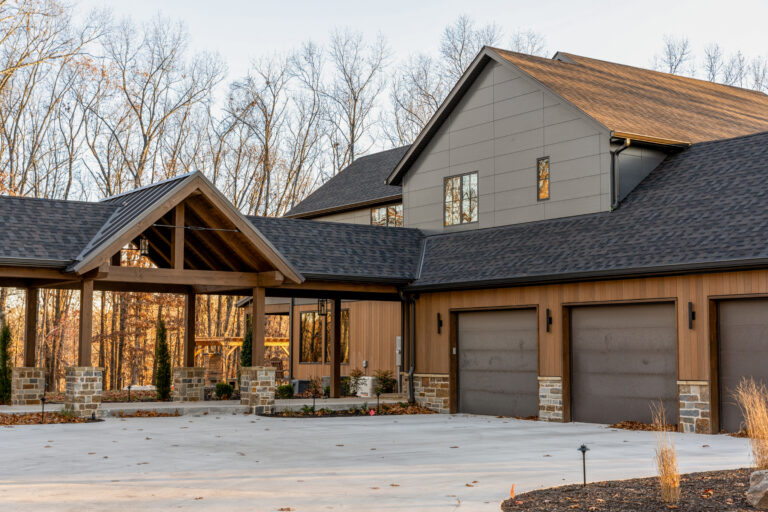
If you don’t already have architectural plans, you’ll work with an architect to translate your vision into technical drawings. Homeowners get really excited about this phase because it lets them start to see how their dream can become a reality. However, this phase is also where some major financial decisions are made.
Every design choice, including ceiling heights, window placement, roof pitch, and structural complexity, comes with a cost. A sprawling open floor plan with a vaulted great room will be priced differently from a more compact layout with the same square footage.
At Alair, we review budgets between milestones to keep expectations aligned as the design develops. If a design element is moving costs in a direction you hadn’t anticipated, we talk about it right away. You’ll never arrive at the construction phase only to learn that the plans you fell in love with have quietly outpaced your budget.
Step 3: Structural Costs Are Defined
Once architectural plans are in place, we move into the structural phase of budgeting. This is where we evaluate the foundational elements of your home:
- Foundation: Type, depth, and soil conditions all affect cost.
- Framing: The structural skeleton of your home, priced based on design complexity and materials.
- Roofing: Pitch, material choice, and square footage determine what this portion of the project will require.
- Engineering requirements: Depending on your lot and design, specific engineering may be required to meet local code.
These components establish a significant portion of your total investment. What sets Alair apart is that clients see the actual pricing and vendor quotes behind these numbers. This is what open book construction pricing means in practice: no estimates dressed up as facts, no vague line items. You see real numbers from real vendors.
Step 4: Finish Selections Will Shape the Final Investment
Structural costs set the floor, but finish selections are where a home becomes yours — and where budgets can shift considerably. The choices you make in this phase include:
- Cabinets
- Flooring
- Countertops
- Fixtures
- Appliances
- Trim and millwork
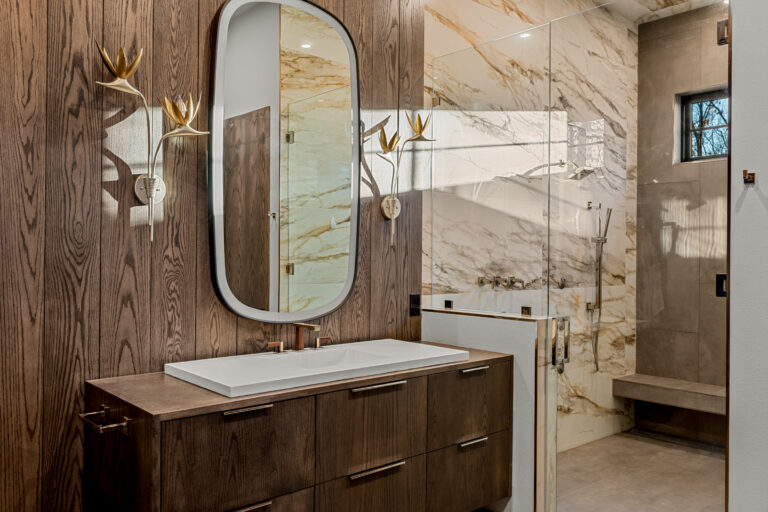
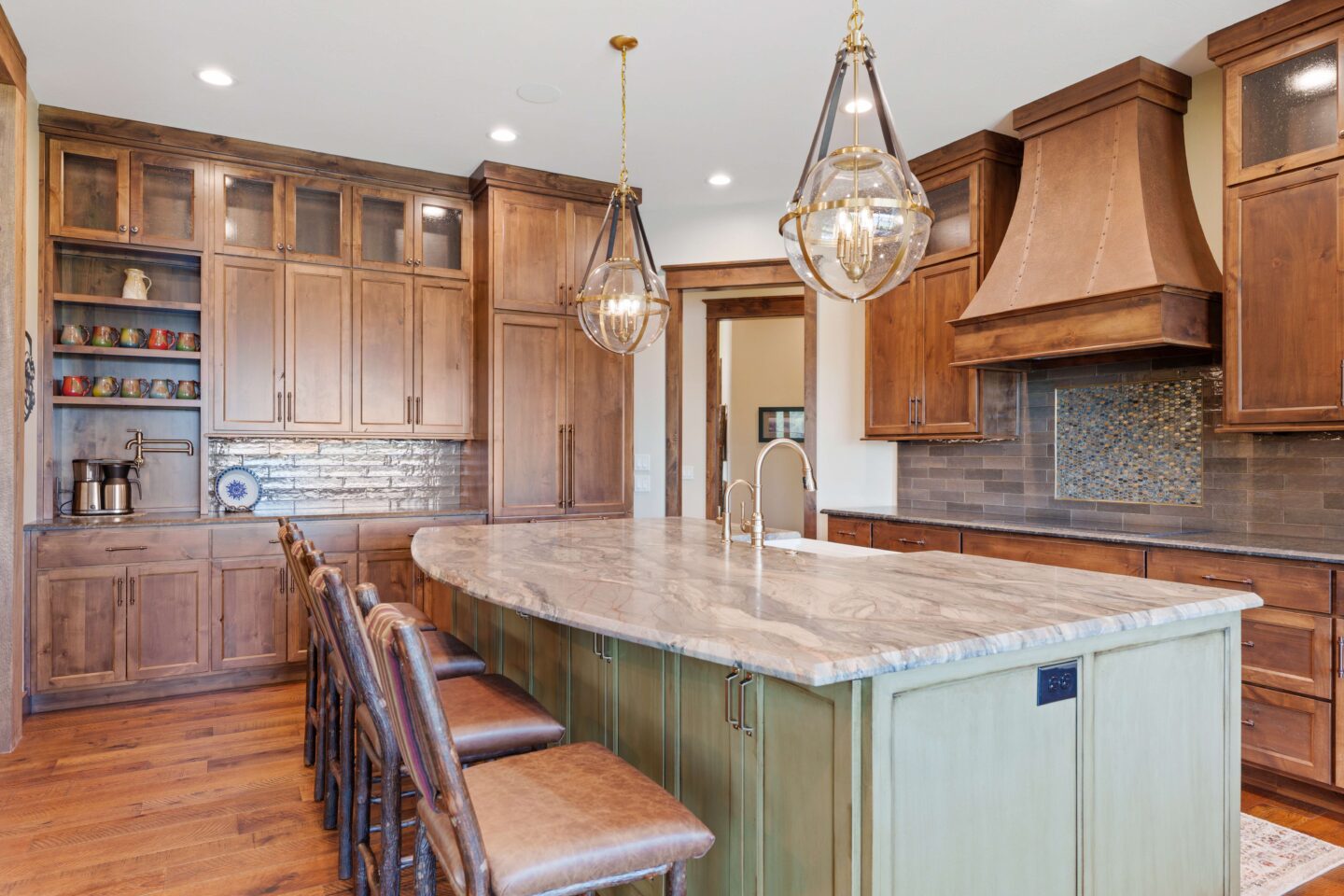
Each category carries a wide spectrum of price points. A custom inset cabinet with hand-selected hardware will cost more than a stock option. Natural stone countertops will price differently than the price you’ll see for materials like quartz or laminate. And please know that there are no right or wrong choices here. What matters is that you understand the financial implications of each one before committing.
This is where the custom home budget breakdown we provide will be especially valuable. As you make selections, we review pricing with you. You’re never choosing finishes in a vacuum and learning the cost later. You’re making informed decisions at every turn, which means you stay in control. This is simply one of the big value-adds that you get from our boutique-level service.
Step 5: The Construction Agreement Is Built Around Real Numbers
Once structural costs are established and finish selections are made, the construction agreement is finalized. At this point, the numbers aren’t estimates or projections. This is where you are seeing actual quotes tied to a very well-defined scope.
This approach is intentional. It removes a significant amount of uncertainty before construction ever begins. You’ll understand exactly where every dollar is allocated before a single nail is driven.
What Open-Book Pricing Means for Homeowners
Open-book construction pricing changes the relationship between a builder and a homeowner. Here’s what it looks like at Alair:
- You see every vendor and subcontractor quote. No markups hidden behind a single bundled line item.
- No hidden fees. What’s quoted is what’s charged.
- Full visibility into project expenses. You can trace every dollar back to a specific scope of work.
- Greater trust throughout the build. When homeowners feel informed, they feel confident, and the entire project runs more collaboratively.
How Much Does It Cost to Build a House in Missouri?
Every custom home is unique, but general benchmarks can give you a starting point for planning. So, let’s take a look at the typical costs to build a home in Missouri.
- Non-custom home: $180–$300 per living square foot
- Custom home: $350–$600 per living square foot
- Average non-custom home total project cost: $375,000–$750,000
- Average custom home total project cost: $1,000,000 – $3,000,000
This said, there are a lot of factors that influence where your project will fall:
- Lot conditions and site preparation requirements
- Total home size
- Design complexity
- Material and finish selections
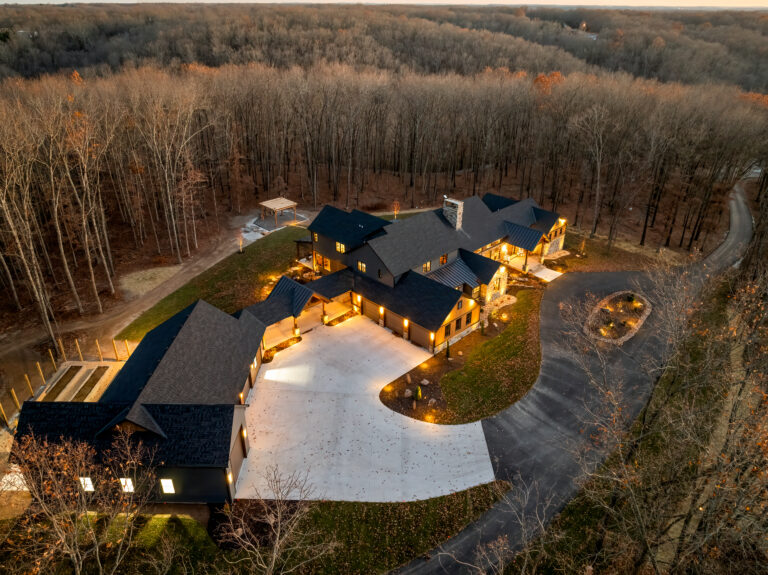
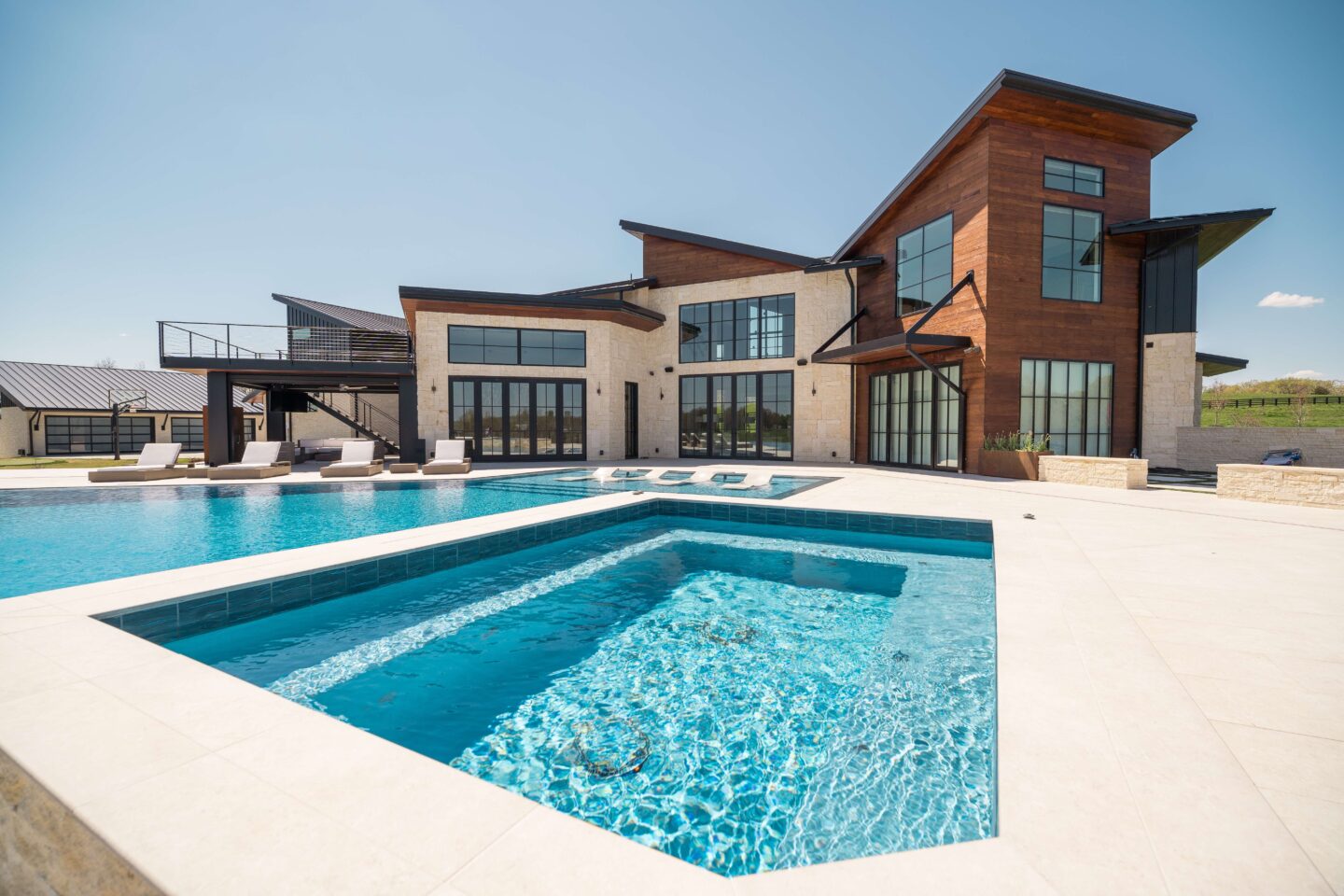
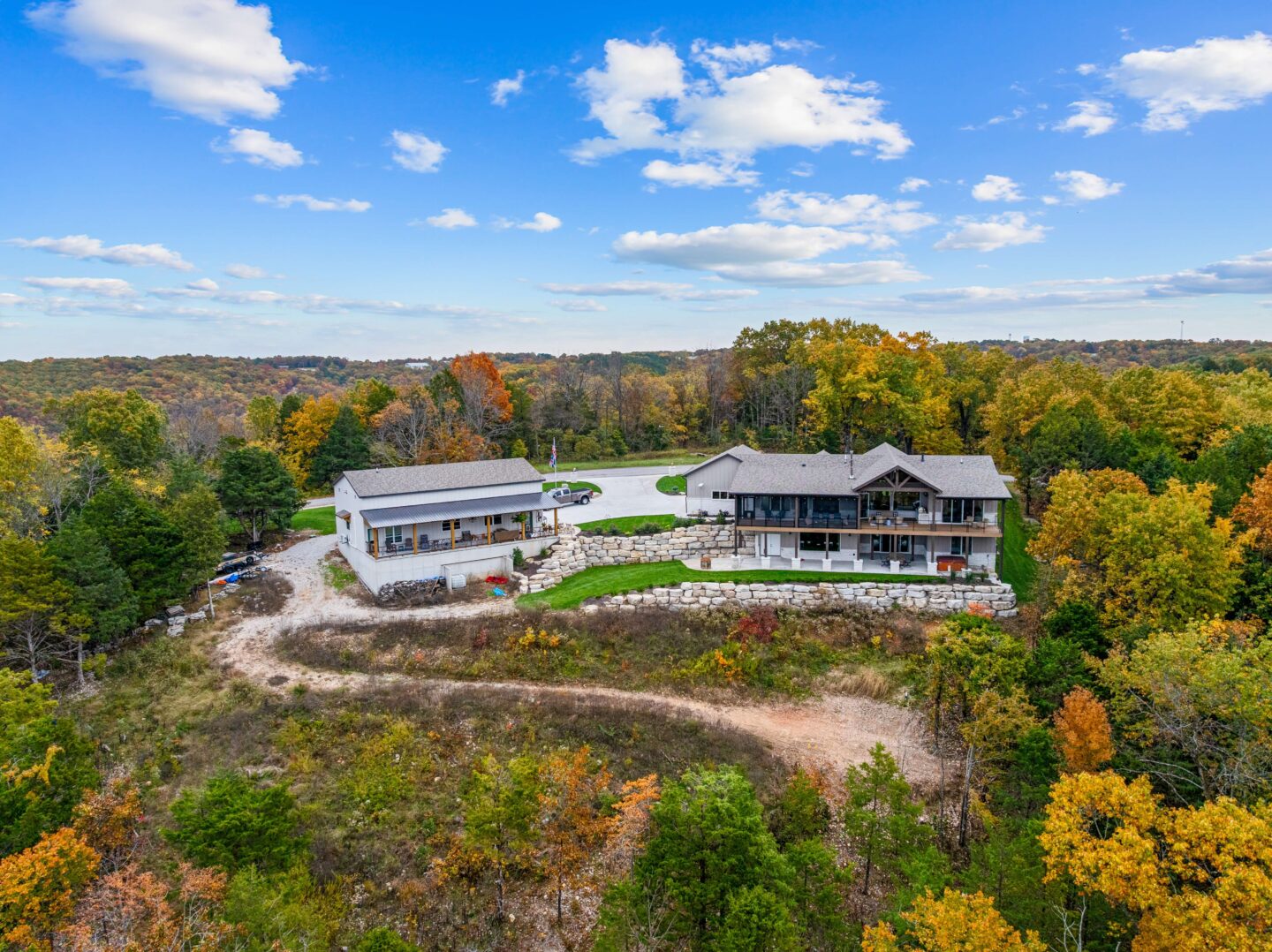
And remember, these are just ranges. The simpler a floor plan is, and the flatter the lot, the lower the price might be. But if you are building a home into a hillside overlooking a lake and there are many custom architectural features, the home will cost more. And of course, additional features such as a pool house, stable, or otherwise, will also come with additional costs.
That’s exactly why transparent home building costs and ongoing budget communication matter so much. Without them, those variables can lead to real surprises and serious homebuyer disappointment.
How Transparency Helps Prevent Costly Surprises
Between each major project phase, Alair conducts budget reviews with our clients. These aren’t formalities. They’re opportunities to review current numbers, flag any changes in material pricing or scope, and make informed adjustments before costs drift in an unintended direction.
If something has shifted, we talk about it immediately. You may decide to substitute one finish for another to stay on budget, or adjust your timeline. Either way, you’re the one making that call, and we promise that you’ll have all the information that you need to do so.
Building Trust Through Transparency
At Alair Springfield, our process is designed around the belief that you should always know where your money is going.
From the planning agreement to architectural plans, from structural pricing to finish selections to the final construction agreement, budget conversations happen throughout the entire journey. Not once at the beginning and never again. The process is consistent, at every milestone, with full visibility into every quote and line item.
As we implied before, building a custom home is one of the most meaningful investments you’ll ever make. You deserve a builder who respects that.
If you’re ready to talk about your custom home goals and what your budget can accomplish in Springfield, we’d love to start that conversation. Contact Alair Springfield today to take the first step toward building your home with complete transparency from day one.