
What Is Future-Proofing?
Future-proofing means planning beyond the color of your cabinets, your tile selection, or any other visible design trends. While finishes and décor can be updated easily, the real value comes from preparing the infrastructure behind your walls. This approach focuses on systems and structures that allow your home to evolve with technology and your family’s changing needs.
Key areas to consider include:
- Electrical systems
- Structural flexibility
- Smart home infrastructure
- Accessibility and aging-in-place design
Jonathan Olarte, Project Manager
Future-Proofing Your Electrical Systems
Technology evolves quickly, and your home’s electrical system should be ready for the future. Our team recommends:
- 200-amps (or even 400-amps) service with extra panel space: Provides room for EV chargers, solar panels, or additional smart home systems.
- Pre-run conduits to key areas: Running conduits to spaces like the attic or exterior walls creates pathways for future upgrades, minimizing costly wall modifications.
- Pull strings in conduits: Makes installing new wiring easier without cutting into finished walls. For example, leaving a conduit with a pull string from your utility room to the roof allows for future solar panel integration without tearing into walls or ceilings.
- Leaving extra slack in electrical wires: If you decide to renovate a room or install built-ins a few years down the road, and an outlet is in the way, you have peace of mind knowing that the wire won’t be too short.
These simple steps ensure your home can handle evolving energy and technology demands.
Designing for Long-Term Comfort
Future-proofing isn’t just about technology; it’s about making your home comfortable and adaptable as life changes. Consider:
- Aging-in-place features: Main-floor owner’s suites, main-floor laundry, curbless showers, and blocking added in all bathrooms during framing so future grab bars can be installed easily around showers and toilets.
- Elevator shafts: These spaces can serve as storage space now while accommodating future mobility needs.
Planning for your future needs today saves time, money, and disruption down the road.
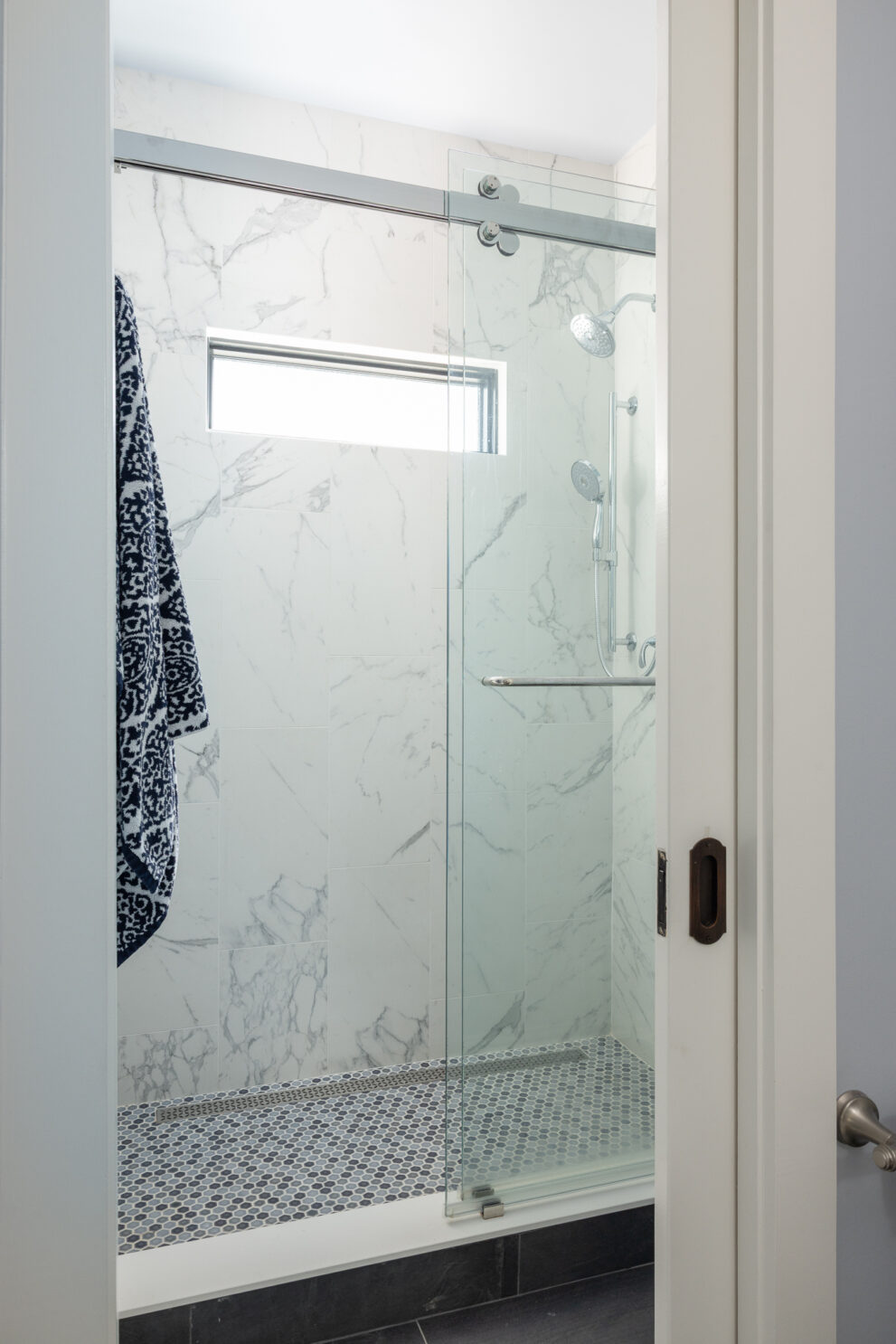
A recent Arlington home addition and remodeling project included a first-floor powder room with a shower hidden behind pocket doors. Perfect for older guests and future aging-in-place.
Preparing for Smart Homes of Tomorrow
From toilets that open and close automatically to appliances you can control from your smartphone, smart-home technology is becoming the norm. The true value, however, lies in the infrastructure that supports future innovations. Hardwired WiFi, smart thermostats, and integrated lighting systems are just the start. Proper planning ensures your home can easily adopt new technologies as they emerge.
Is Future-Proofing Worth the Investment?
Absolutely. The upfront investment in planning and infrastructure during construction is far less than the cost of retrofitting later. Future-proofing provides:
- Peace of mind: Your home can adapt as technology and family needs evolve.
- Cost savings: Avoids expensive renovations and disruptions down the line.
- Long-term value: Makes your home more attractive and functional for years to come.
In short, future-proofing is simply good planning for your Arlington dream home.
Trust Alair Arlington to Build Your Future-Proof Home
Led by award-winning builder Chad Hackmann, Alair Homes brings over 20 years of experience in building and remodeling homes across Arlington, McLean, Falls Church, and Washington, D.C. Whether you’re planning a custom home, renovation, or addition, our team delivers exceptional results through a transparent, client-focused process. We take the time to understand your current lifestyle—and how it may evolve—to help you design a home that’s built to last. Connect with us today to explore how we can future-proof your Arlington custom home.