
A casita, which is Spanish for “little house,” is a detached or semi-detached living space on the same property as your main home. Casitas are a type of accessory dwelling unit (ADU) popular in the US southwest, offering privacy and flexibility.
A casita usually includes:
- A private entrance
- A bathroom (often a full bath)
- A sleeping/living area
- Sometimes a kitchenette or full kitchen
Whereas carriage houses tend to be built above garages on the east coast, the southwestern casita takes advantage of more expansive outdoor space.
In Chandler and across the Southwest, casitas are often accessed through a courtyard, garden, or side yard to create separation from the main home and maintain a sense of privacy for residents of both properties.
Why are casitas becoming popular in Arizona?
Legislation passed in 2024 and 2026 reflects a surge of popularity in the casita style of housing. As populations rise faster than available housing can accommodate them, these ADUs provide a new way for people to live in the East Valley.
But beyond that, casitas offer Arizona homeowners a number of other advantages.
Guest accommodations
A more elevated option than a guest room is a casita, which can host friends or family members without intruding on the primary homeowners. Whether it’s a temporary visit or transitional housing during events like renovations or relocations, casitas offer convenience and autonomy for your guests.
Multigenerational living
Casitas are popular for homeowners whose family members looking to move closer together. The detached ADU offers a convenient space for aging parents, adult children, or long-term guests without sacrificing independence.
Flexible use over time
Today it might be a home office. Tomorrow, a guest suite. Down the road, it could become a rental space or a private retreat for you. Casita design might be personalized for specific hobbies or interests, but the design can also be universal enough to repurpose for different uses.
Climate-responsive design
Chandler’s warm climate makes indoor-outdoor living ideal. You can design your casita to open into courtyards, integrate shaded patios, and create natural airflow, making them feel larger than their footprint.
Property value
A thoughtfully designed casita can enhance both the usability and long-term value of your home, especially in markets where flexible living spaces are in demand.
Casita zoning & regulations in Chandler: what’s changed (and what it means for you)
If you’re considering building a casita in Chandler, there’s good news: recent legislation in Arizona has made it significantly easier for homeowners to add ADUs (the category that includes casitas).
In 2024, the state passed House Bill 2720, a law that reshapes how cities like Chandler regulate these types of spaces. Here’s what that means in practical terms.
For cities with populations over 75,000 (like Chandler), municipalities are now required to allow at least one attached and one detached casita (ADU) on any lot zoned for a single-family home. These are considered “permitted uses,” meaning they can typically be approved administratively, without rezoning, variances, or public hearings.
Size guidelines
Your casita can be:
- Up to 75% of the main home’s size, or
- 1,000 square feet (whichever is less)
- 5 feet away from your side and rear property lines
If your property is one acre or larger, there may be an opportunity to build more than one detached casita, particularly if one is designated as an affordable housing unit
In short, homeowners have far more design freedom than before.
What still applies
While the law removes many barriers, there are still important considerations:
- Building codes, fire codes, and health regulations still apply
- Casitas cannot be built over utility easements without approval
- HOA rules (if applicable) may still impose additional restrictions
- Local implementation may vary slightly as Chandler adopts and refines its own regulations
While state law has made it significantly easier to get city approval, Chandler is home to many vibrant homeowner associations (HOAs) and planned communities.
Part of the Alair process involves a comprehensive site feasibility study, where we review your specific neighborhood’s architectural guidelines to ensure your casita design is compliant from day one.
Design essentials for the desert climate
In Chandler, a casita has a unique job: it must stay effortlessly cool during a 115°F July afternoon while feeling like a seamless extension of the outdoors during our glory months from October to April.
The most successful casitas feel comfortable year-round, blur the line between indoors and outdoors, and do it all while managing heat, sun exposure, and energy use efficiently.
With that in mind, here are some design features to accommodate Arizona’s climate.
Start with orientation
In the Arizona desert, where your casita sits on the lot matters as much as how it’s built.
- Minimize large windows on the west-facing side, where afternoon sun is most intense
- Take advantage of north- and south-facing exposures for more consistent, manageable light
- Use the placement of the casita to help shape shaded outdoor spaces, like courtyards or breezeways
A well-oriented casita reduces heat gain before you even start thinking about materials or mechanical systems.
Create intentional indoor-outdoor living
The goal isn’t just openness; it’s comfort. Shade and airflow turn outdoor space into everyday living space.
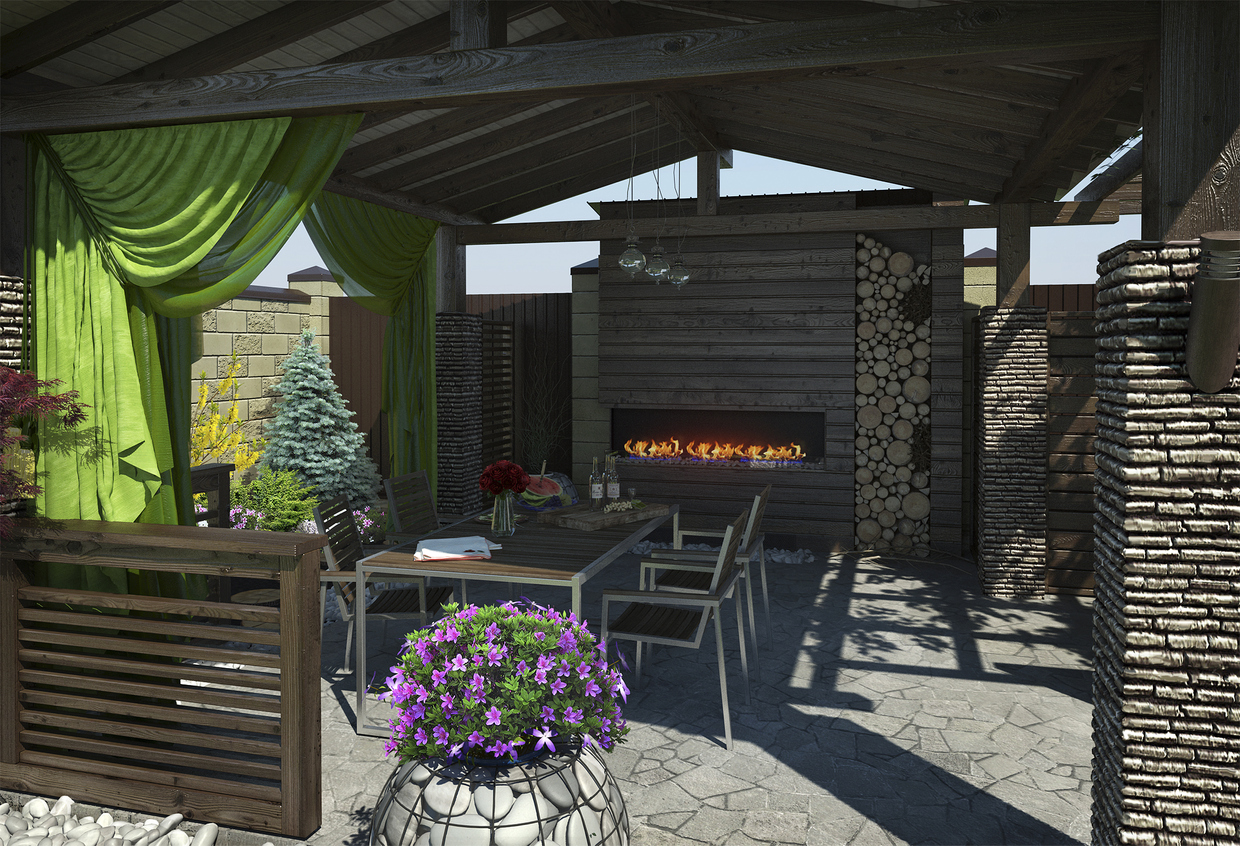
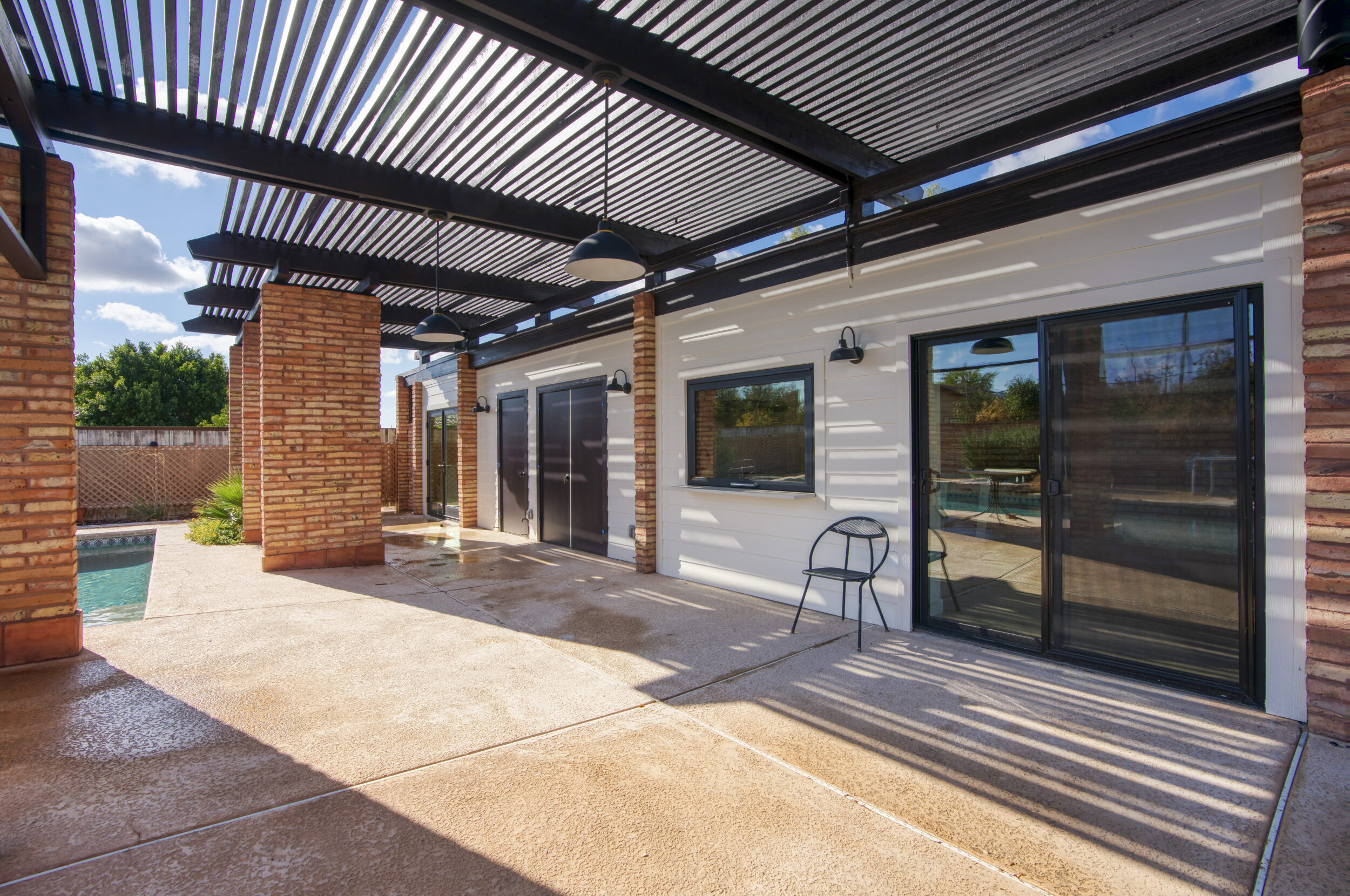
- Incorporate covered patios, pergolas, or ramadas to create usable shade
- Use large sliding or folding doors to connect interior spaces to outdoor living areas
- Design courtyards or garden walls that offer privacy while buffering wind and sun
While large glass walls provide stunning views, they can also act as giant radiators in the Arizona sun. To prevent this, consider spectrally selective low emissivity (low-E ) glass. This advanced coating acts like a smart filter to allow natural light to pour in while reflecting the infrared heat and UV rays that fade your furniture and spike your AC bill.
Integrated desert landscaping
In the desert, thoughtful landscaping can lower surrounding temperatures and make outdoor areas far more usable.
Consider incorporating shade trees and other vertical elements to block sun exposure, as well as gravel, pavers, or low-water ground cover to reduce heat reflection. Using permeable pavers or Mexican beach pebbles can manage drainage during rain while reducing the heat around the building.
Where to start
Building a casita is ultimately about more than zoning allowances or design features; it’s about understanding how you want to live.
Do you need space for family today, and flexibility for something else tomorrow? Or do you want a quiet retreat, a place to host, or an investment in your property’s long-term value?
Starting with those questions allows the design to follow with purpose.
In Chandler and across the East Valley, casitas are quickly becoming a smarter way to think about space, family, and long-term value.